
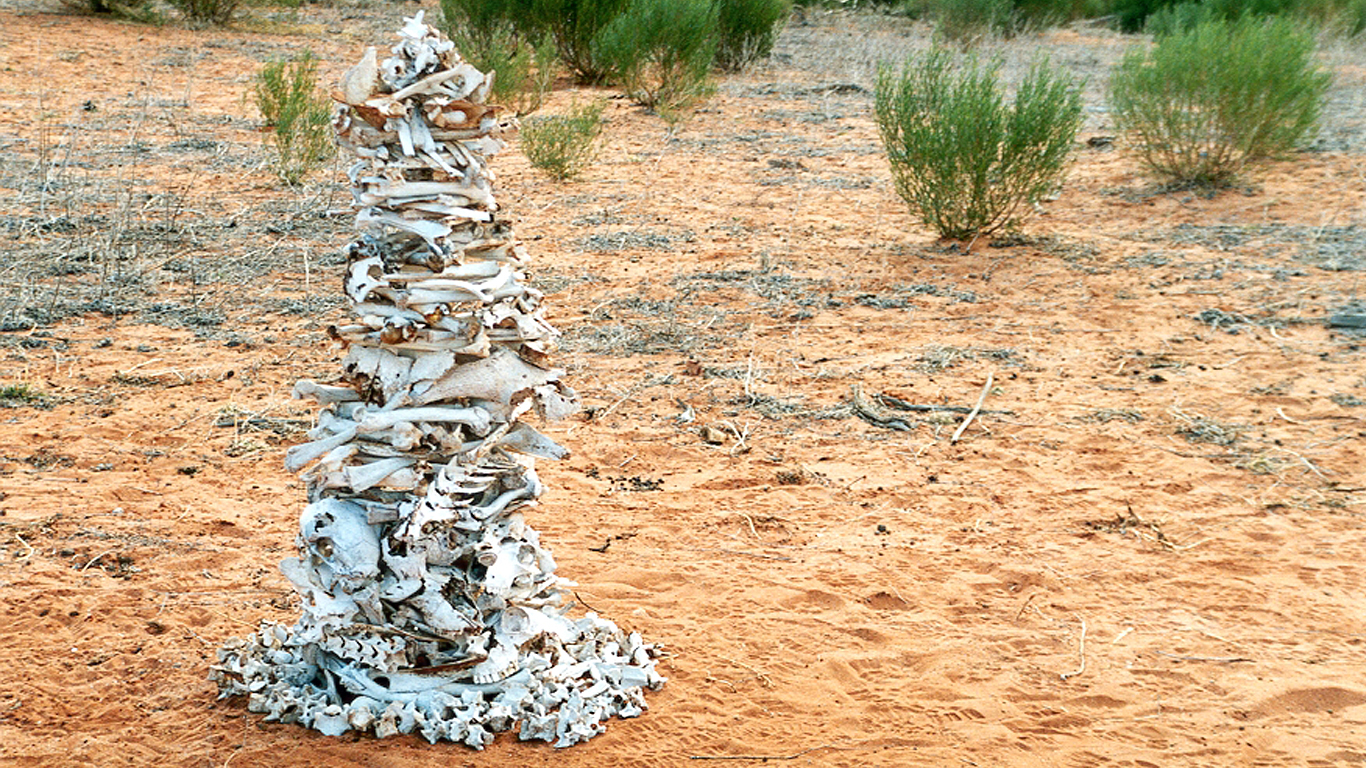
Bone shelter – in progress
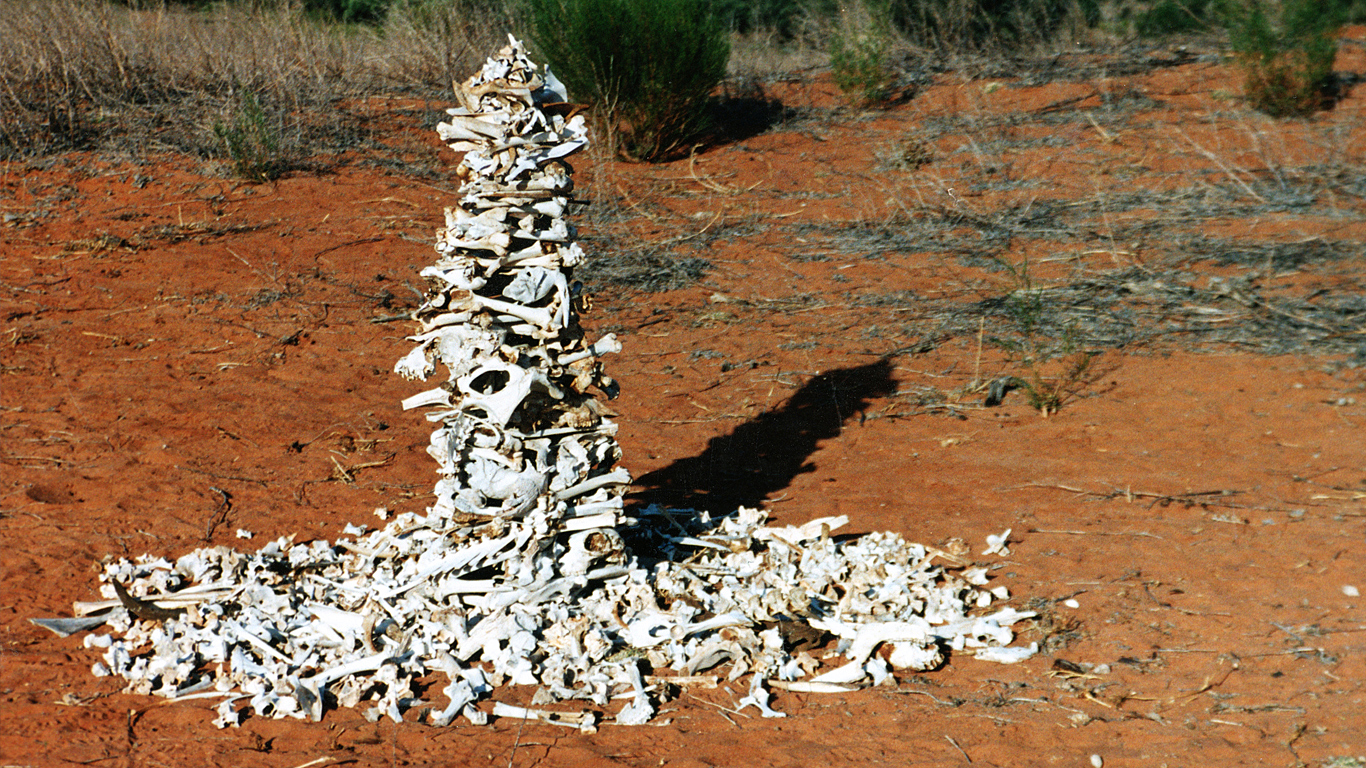
Bone shelter
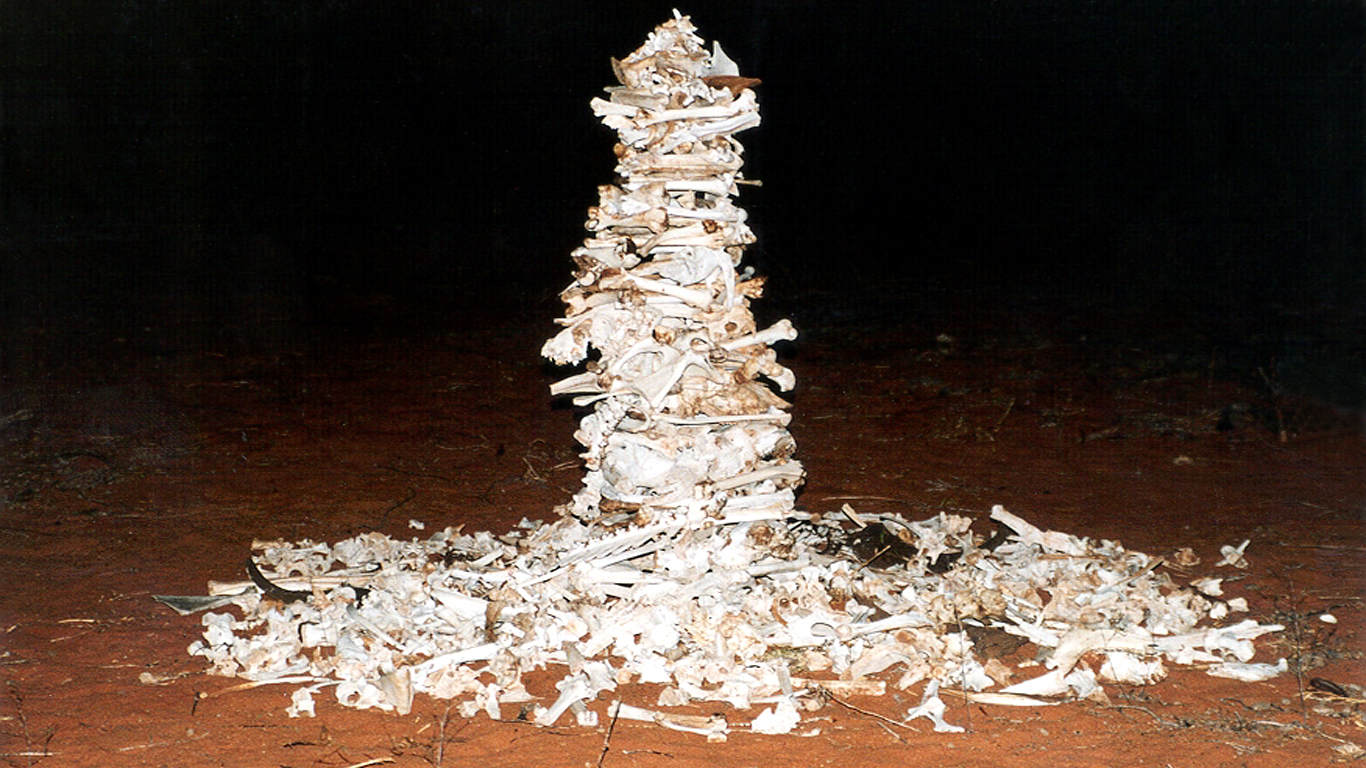
Bone shelter
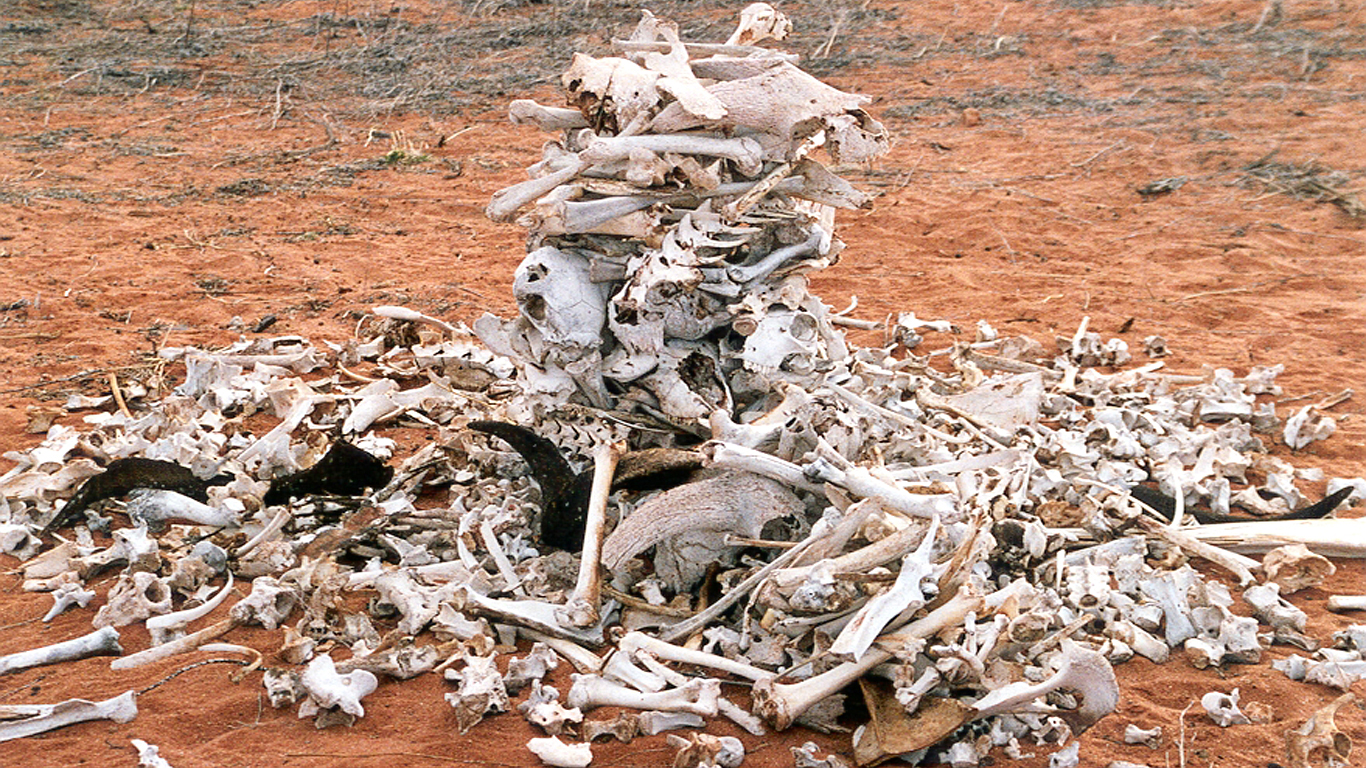
Bone shelter – 2 days later
Bone Shelter emerged from a ritualised process of walking and collecting within a small radius of the site, forming a quiet dialogue with the immediate landscape. The bones, sun-bleached and brittle, were gathered not simply as material, but as markers of the land’s aridity and the stark conditions that shape life From these fragments, I constructed a hollow, column-like structure—a gesture toward shelter, yet deliberately fragile, as if to acknowledge the impermanence that defines this place.
The work was both tentative and responsive. After an initial collapse, the column was rebuilt, and its presence softened by a circle of remaining bones at its base—an attempt to ground the vertical form within the vast horizontality of the open plain. At night, under the full moon, the structure gave off a pale, spectral glow, the bones resonating in the landscape with a quiet, primal weight. In those moments, the work felt both deeply still and strangely alive.
Over the following days, the structure succumbed to wind and time, toppling back into the earth. This collapse was not a failure, but a continuation of the work’s intention—its form temporary, its undoing part of its meaning. Due to its conceptual basis and also its materiality, Bone Shelter engaged with the idea of life: its fragility, its vulnerability, and its fleeting traces across the land.
 Michael Shiell